CANON DRIVE
A New Archetype for the California Estate
There is a particular kind of restraint that announces itself not through absence but through precision — where every decision is so considered, so deliberate, that the resulting whole feels inevitable rather than designed. This private estate by Dan Brunn Architecture achieves exactly this kind of authority. Set within a canopied landscape of mature oaks, the home operates simultaneously as a geological object and a living organism, its rounded concrete mass rising from the earth with the quiet confidence of something that has always belonged there.
Form as Landscape
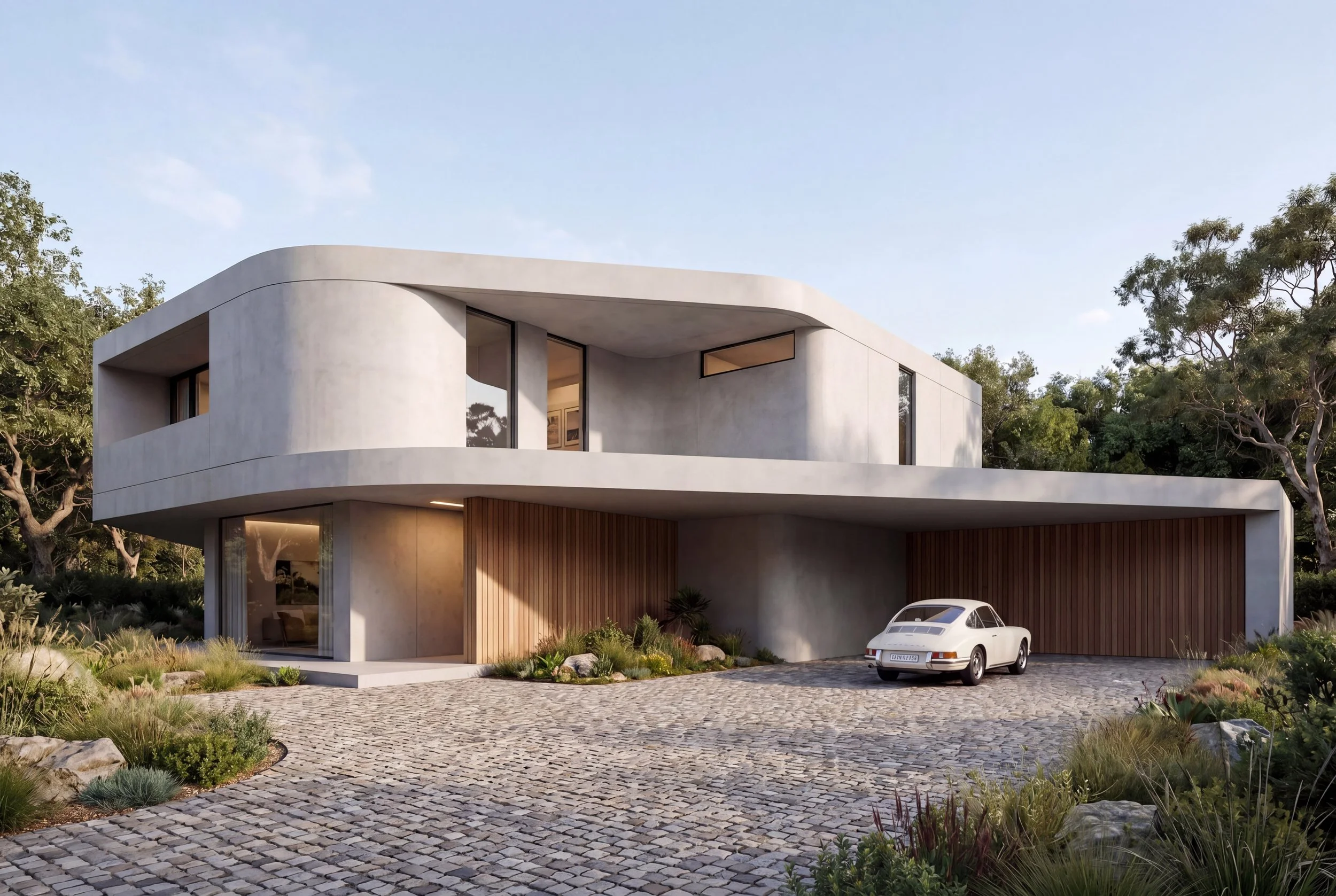
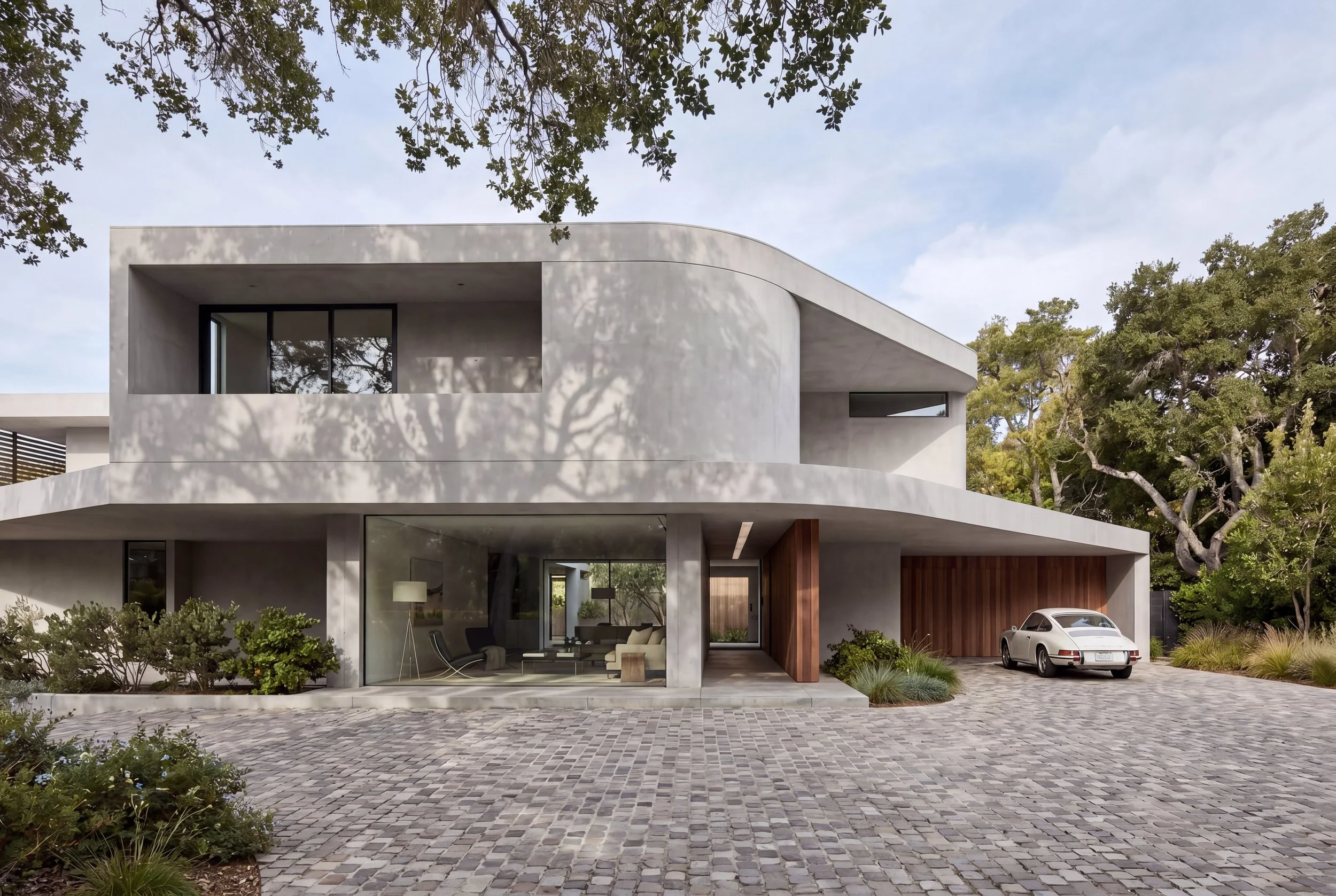
The exterior presents one of the most compositionally resolved facades in recent California residential architecture. A broad horizontal upper volume — clad in board-formed concrete rendered to a silken, monolithic finish — floats above a recessed ground plane of warm vertical wood cladding. The mass curves at its corners with a decisive sculptural radius, softening what might otherwise read as brute weight into something more anatomical, more alive. A cobblestone motor court arrives at a sheltered threshold where concrete meets timber, a material conversation that recurs as the project's central theme. A vintage Porsche 911 in the motor court is no accident of styling — it speaks directly to the belief that objects of enduring design belong in the presence of enduring architecture.
The Section as Experience
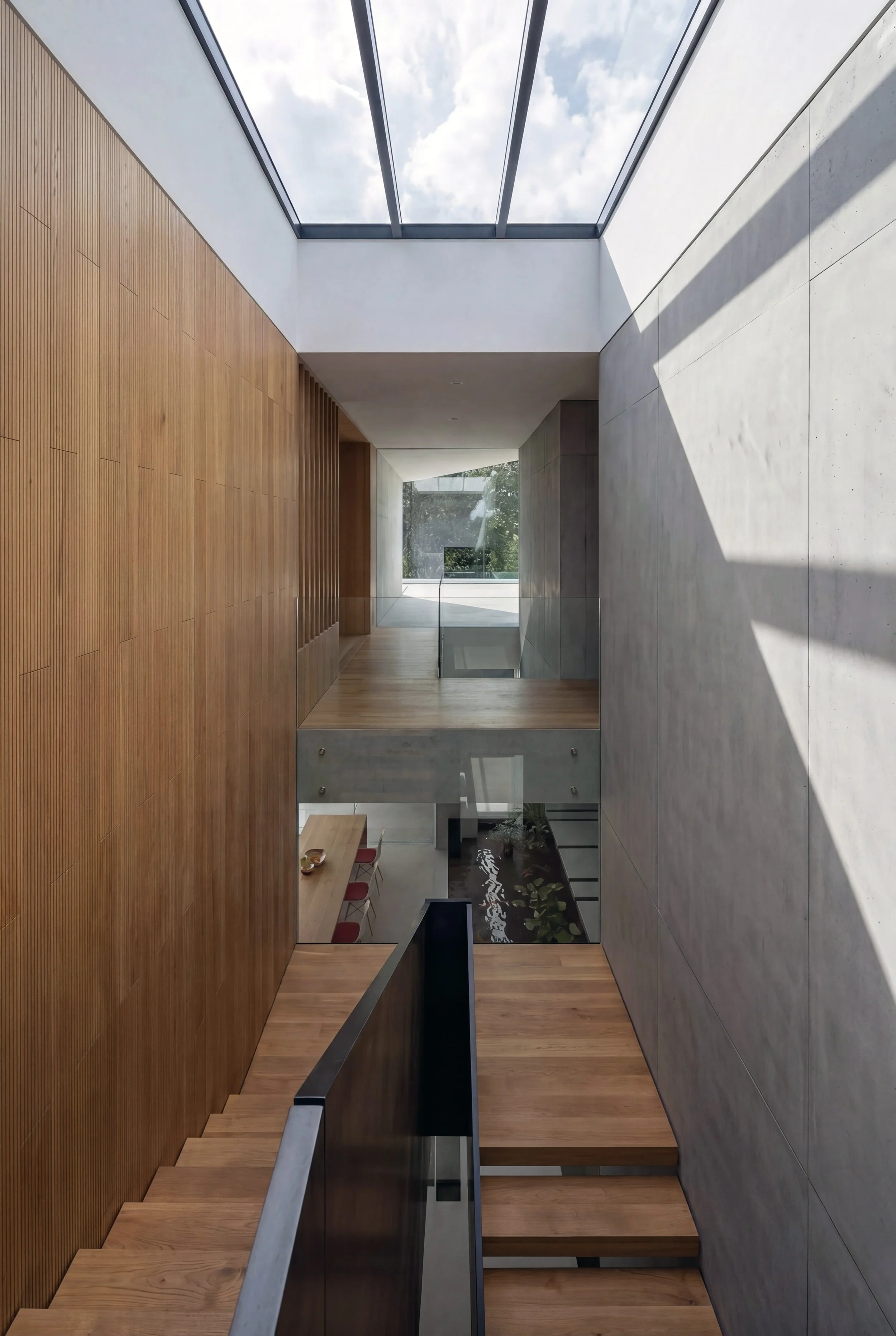
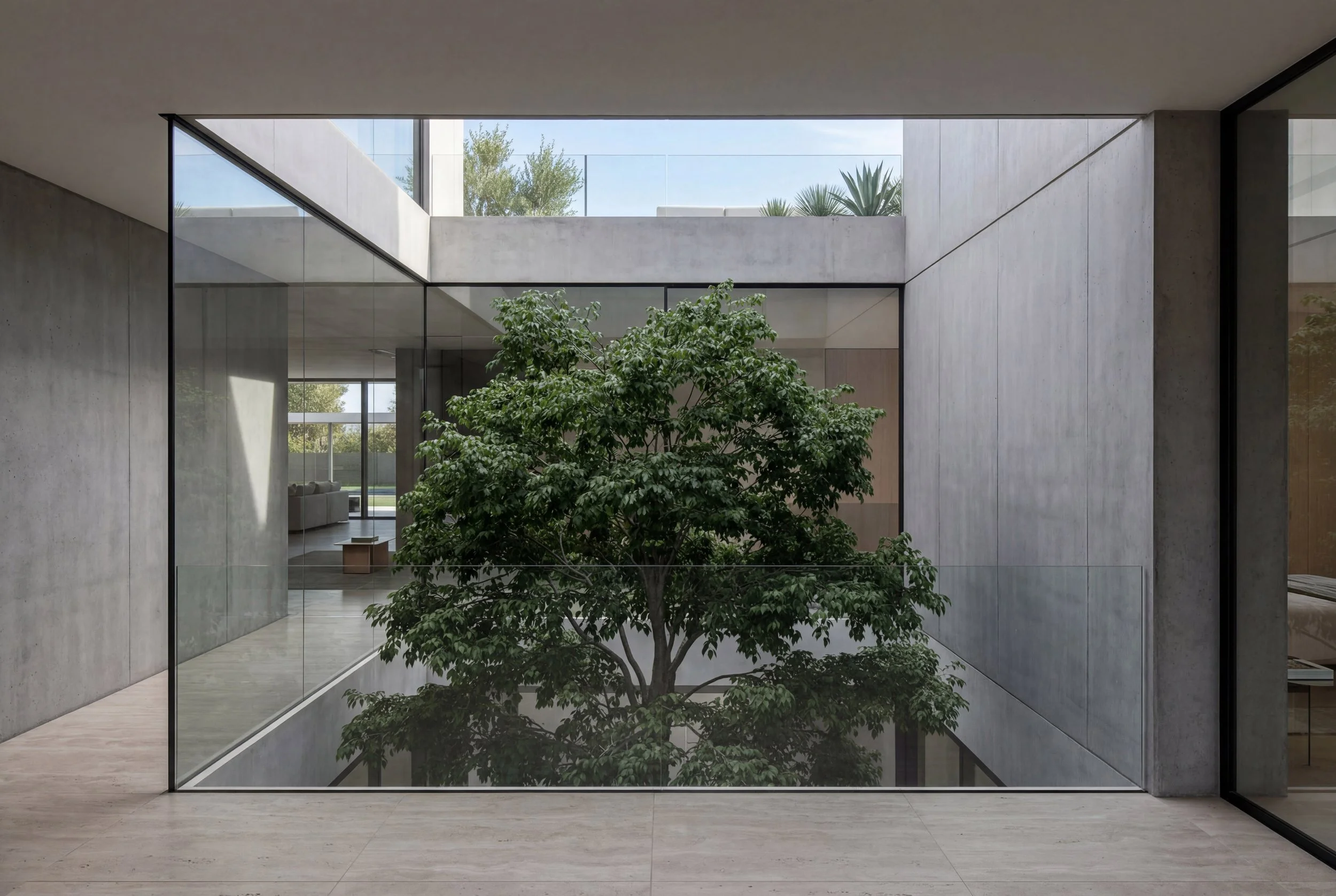
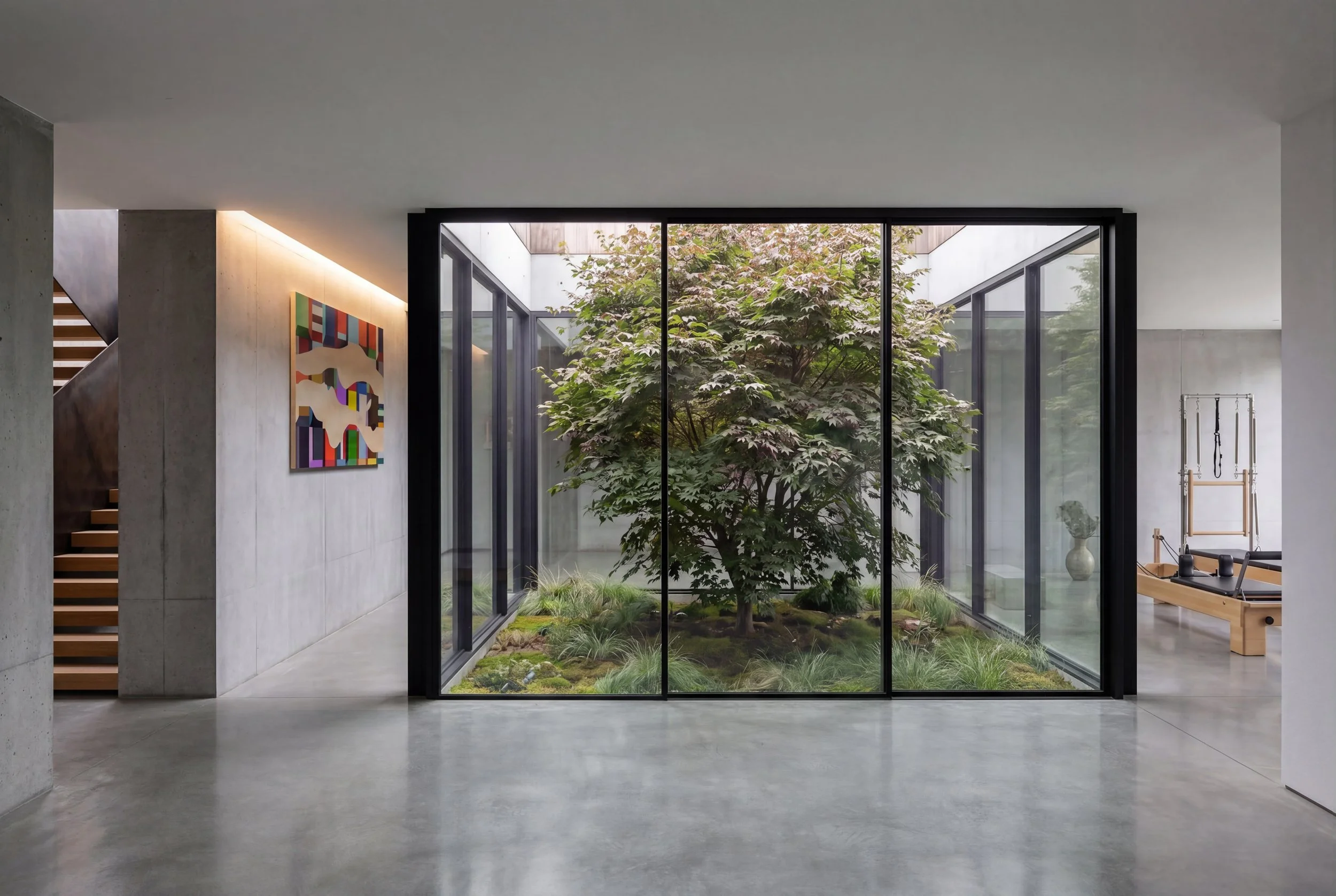
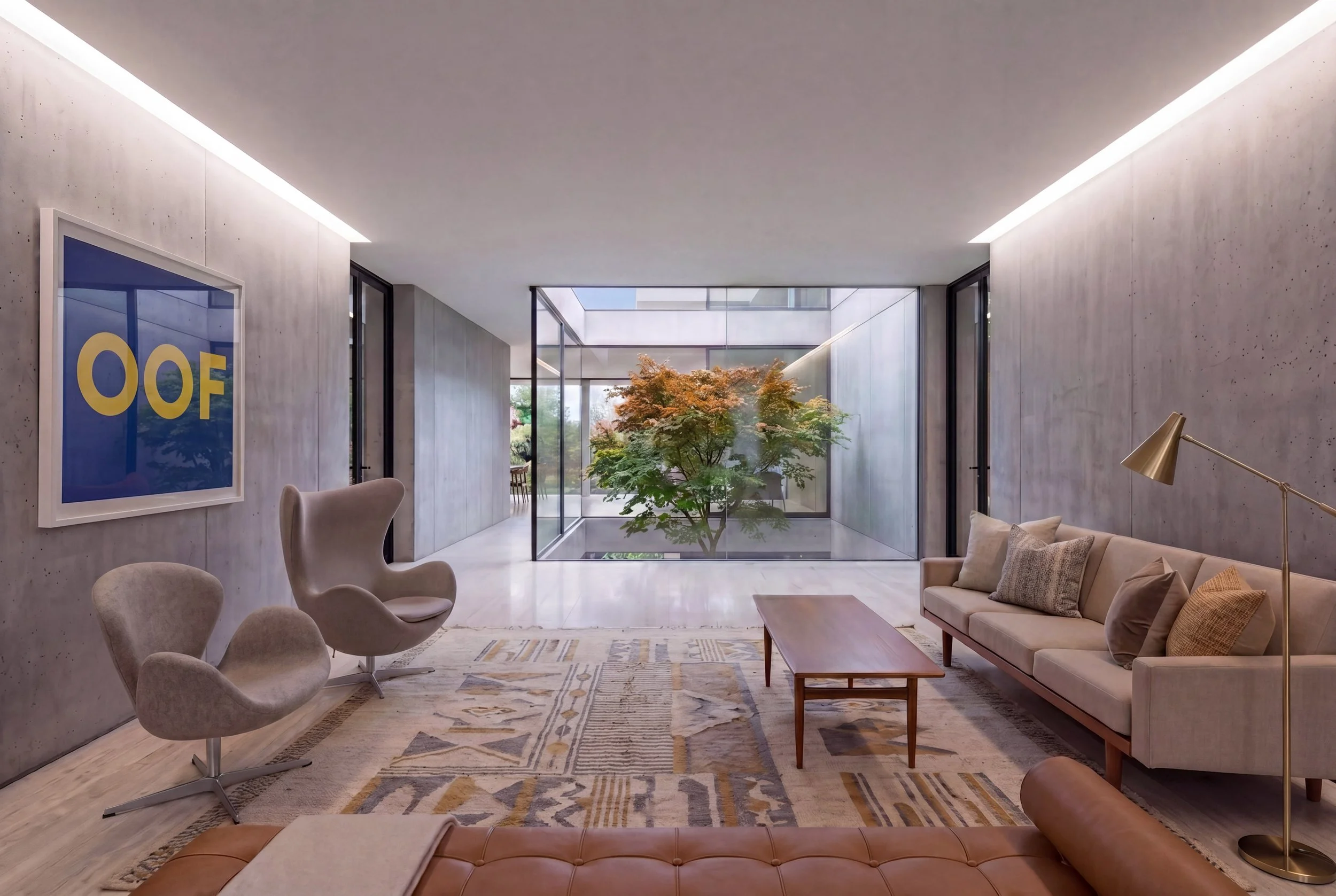
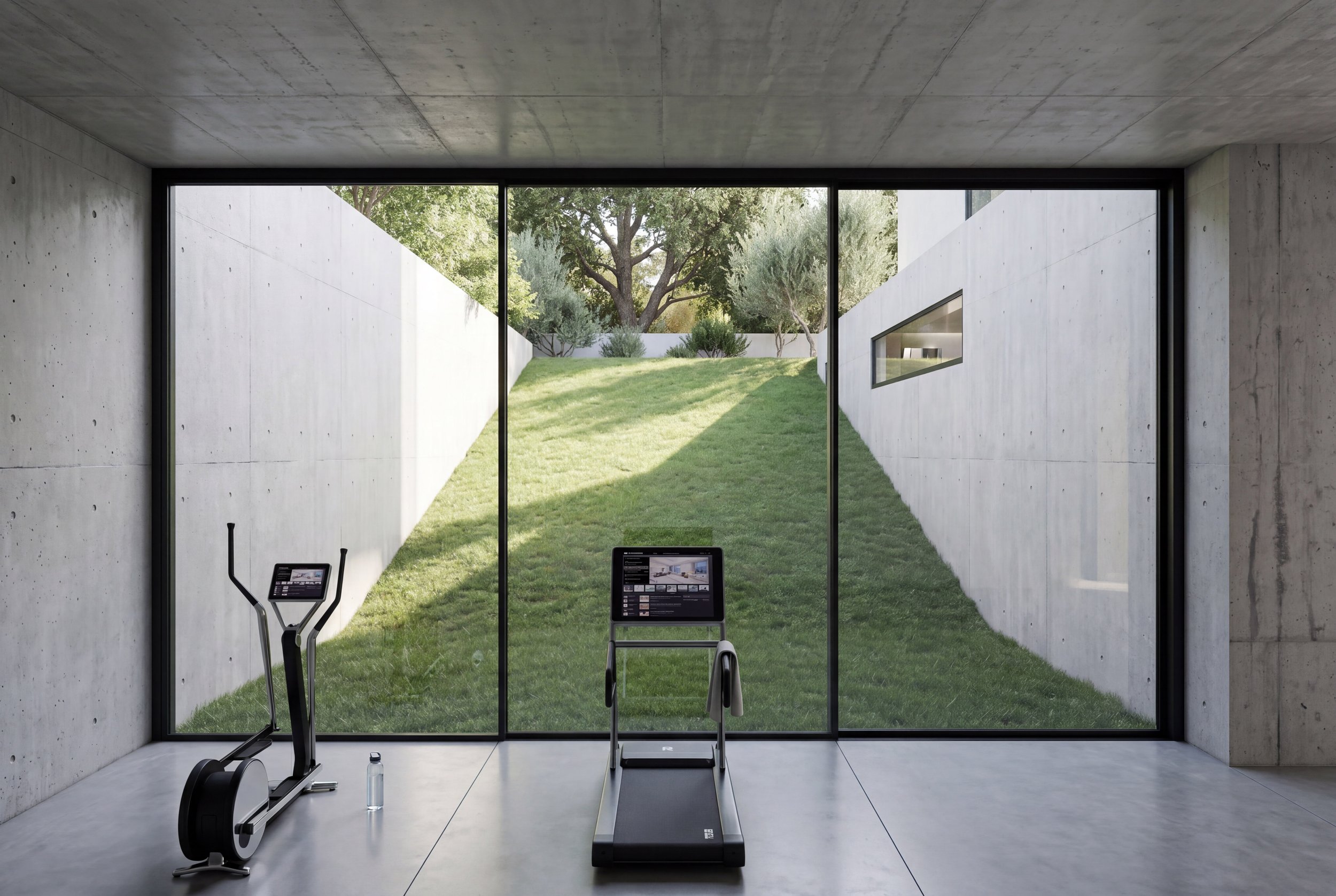
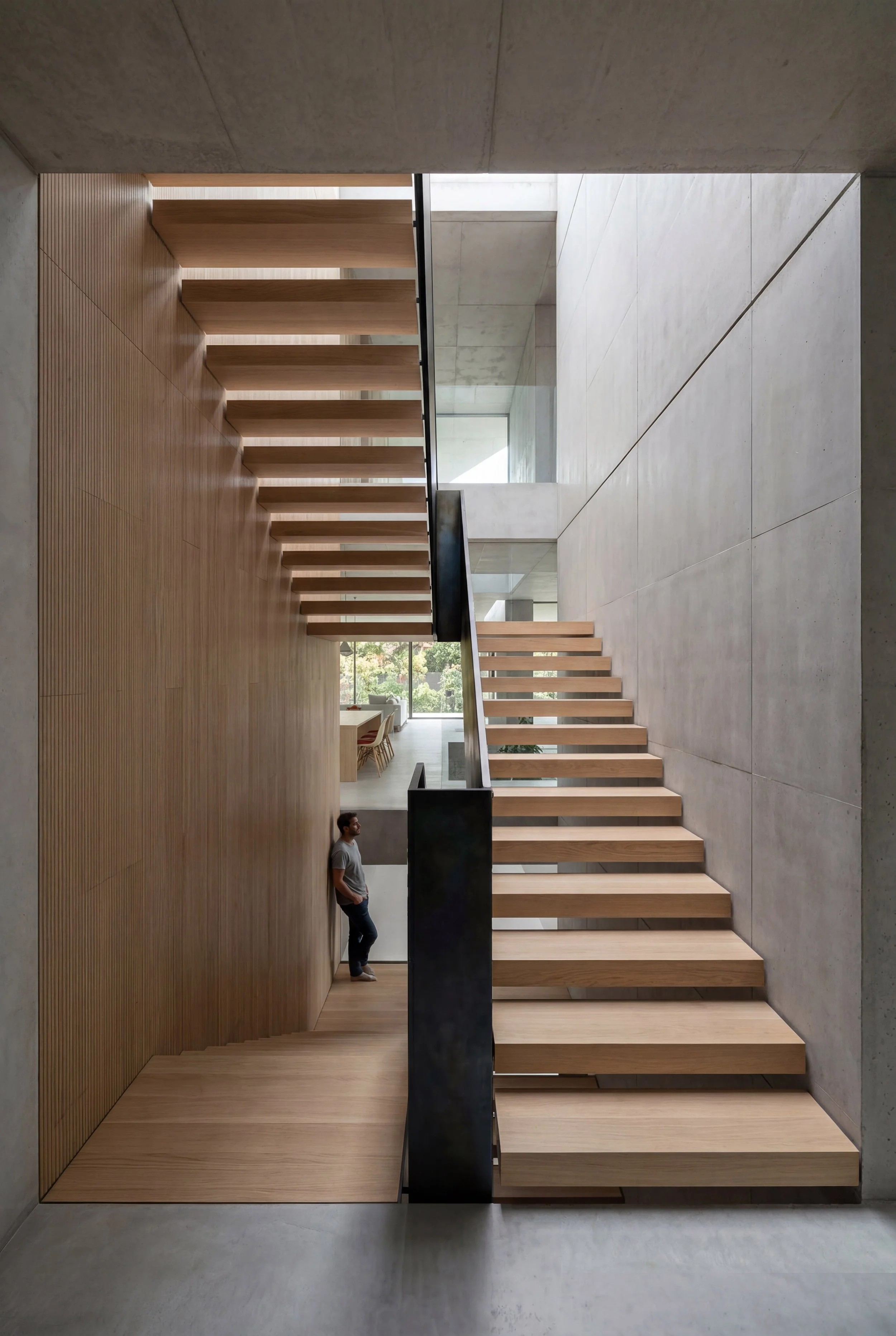
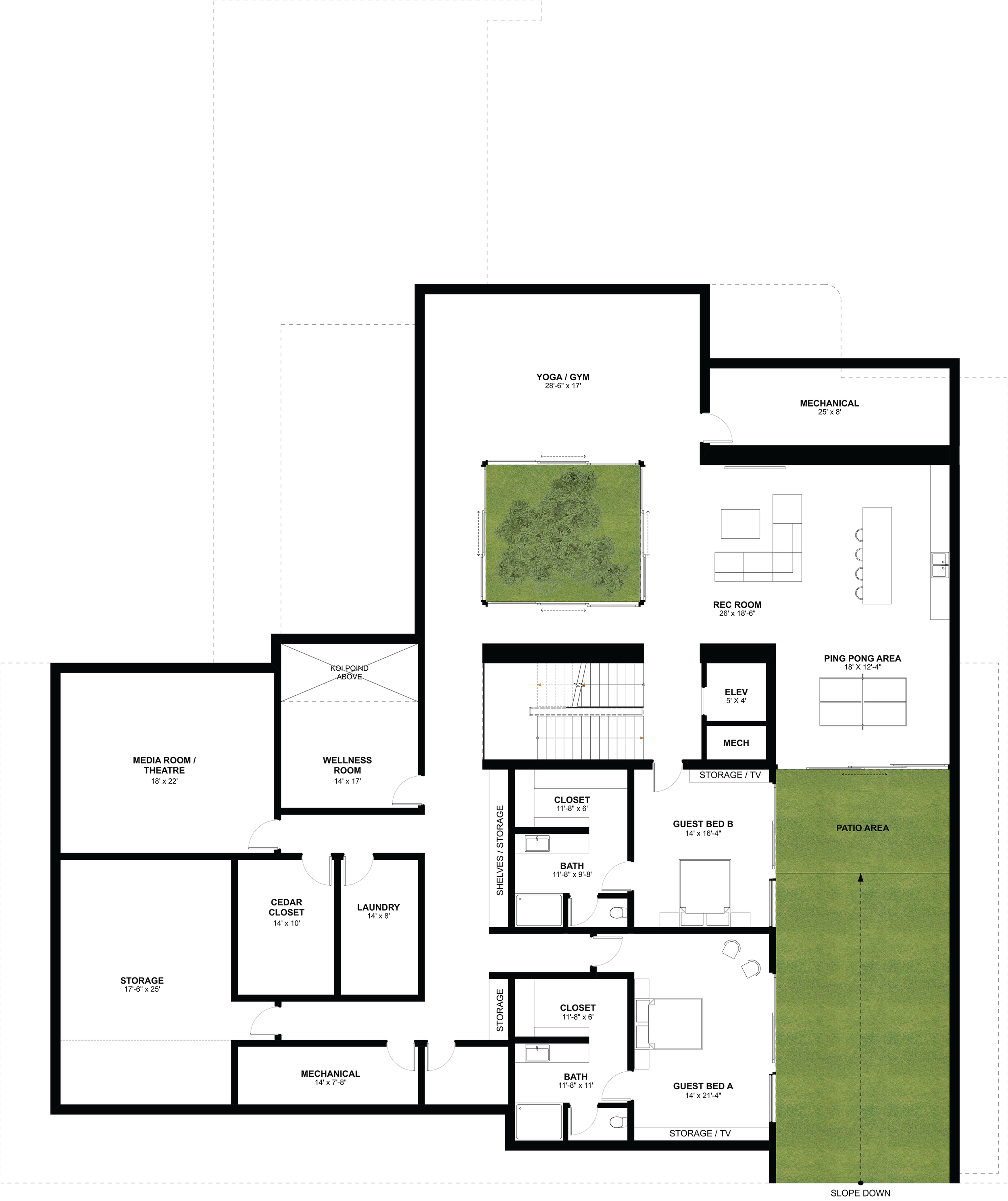
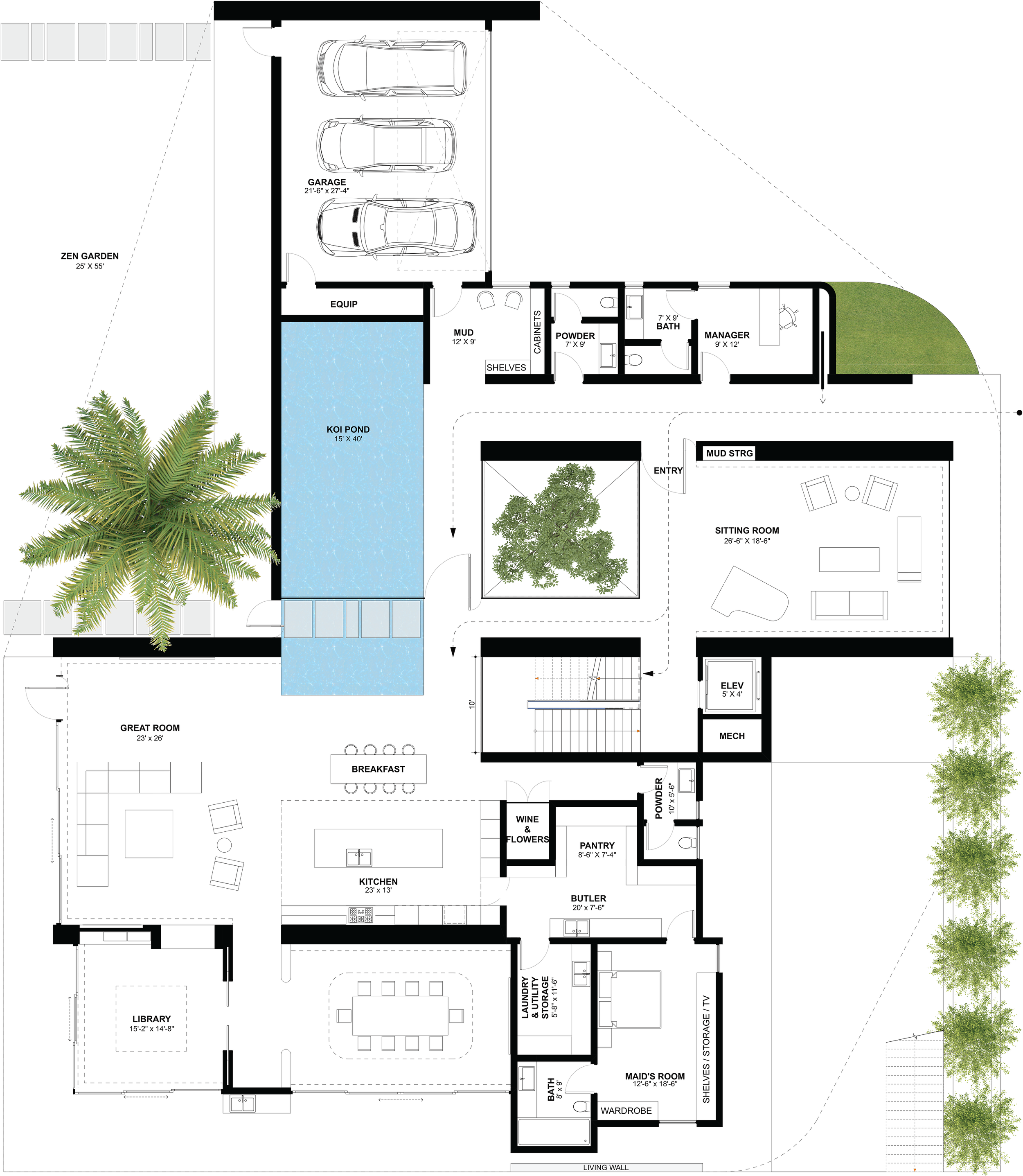
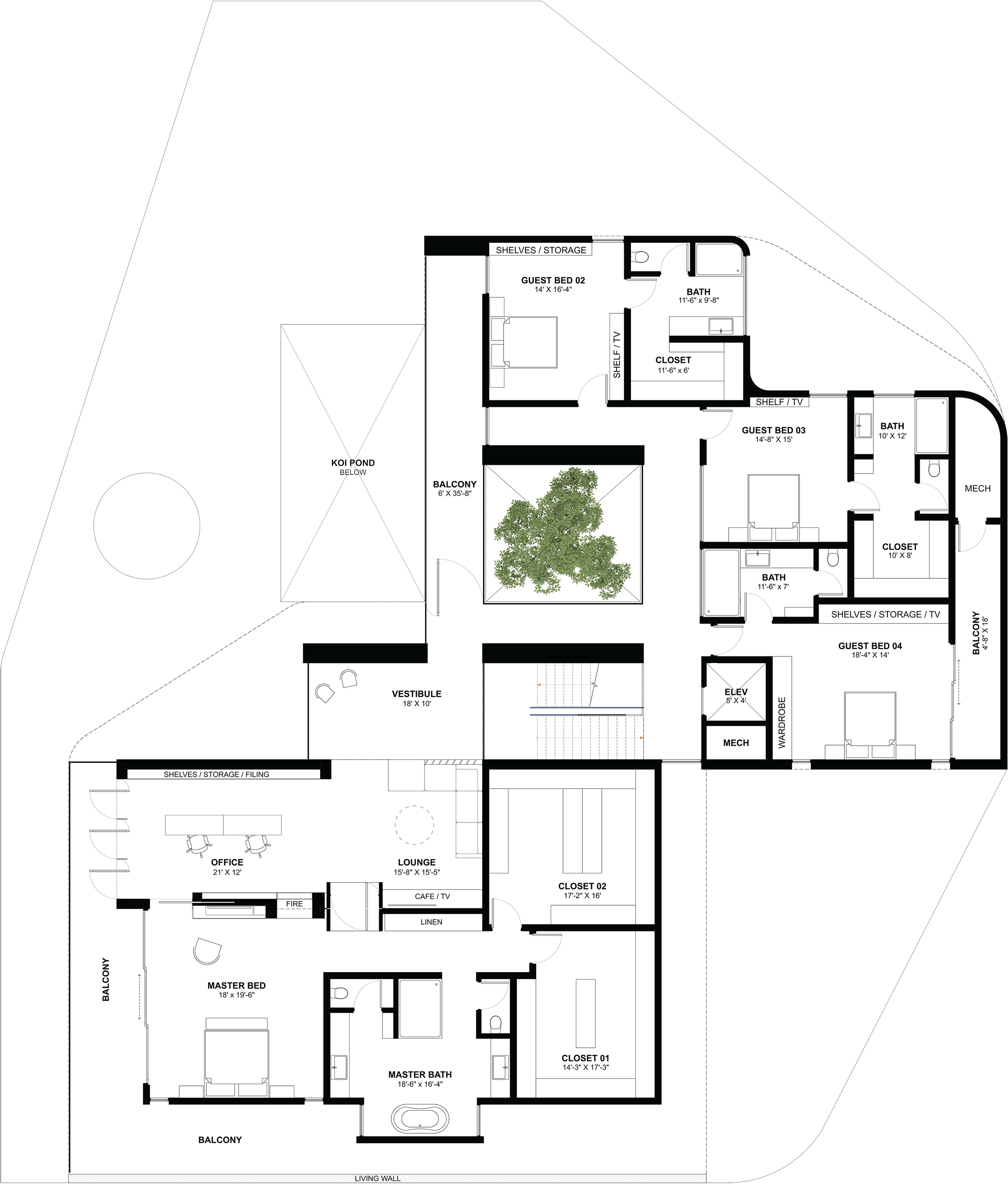
The home is organized around a series of vertical relationships revealed through a central stair hall of startling spatial quality. White oak treads cantilever from a black steel spine with no visible means of support, rising through a full-height void capped by a continuous skylight. At the upper landing, a glass guardrail dissolves the boundary between stair and interior courtyard, collapsing vertical distance into a single breathtaking spatial event. Below, a mature Japanese maple occupies a sunken glass enclosure at the core of the plan — its seasonal transformation a living calendar within the architecture, visible from the gymnasium, the stair, and the corridors that flank it. It is the fixed point around which the entire house rotates.
Material Honesty, Material Warmth
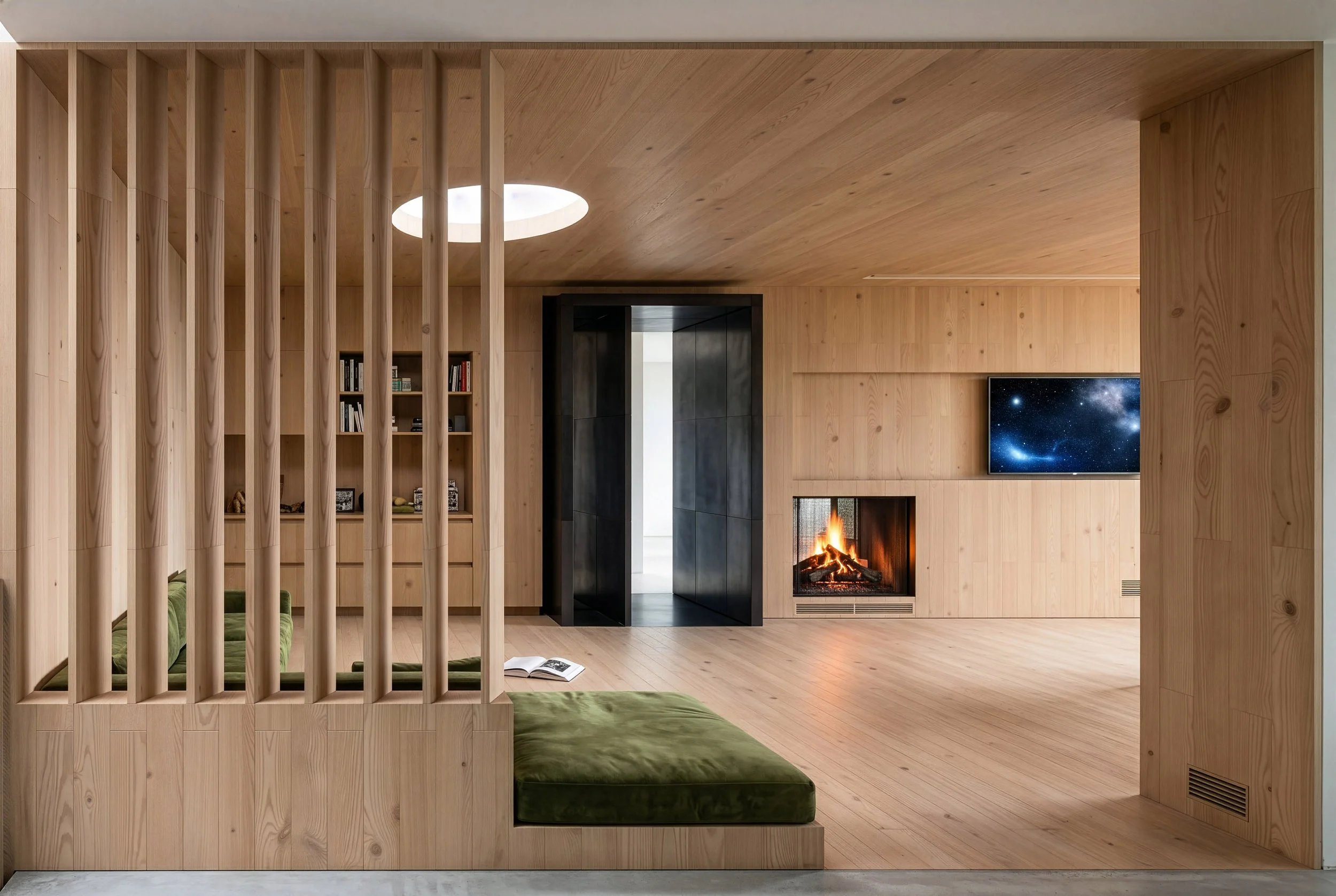
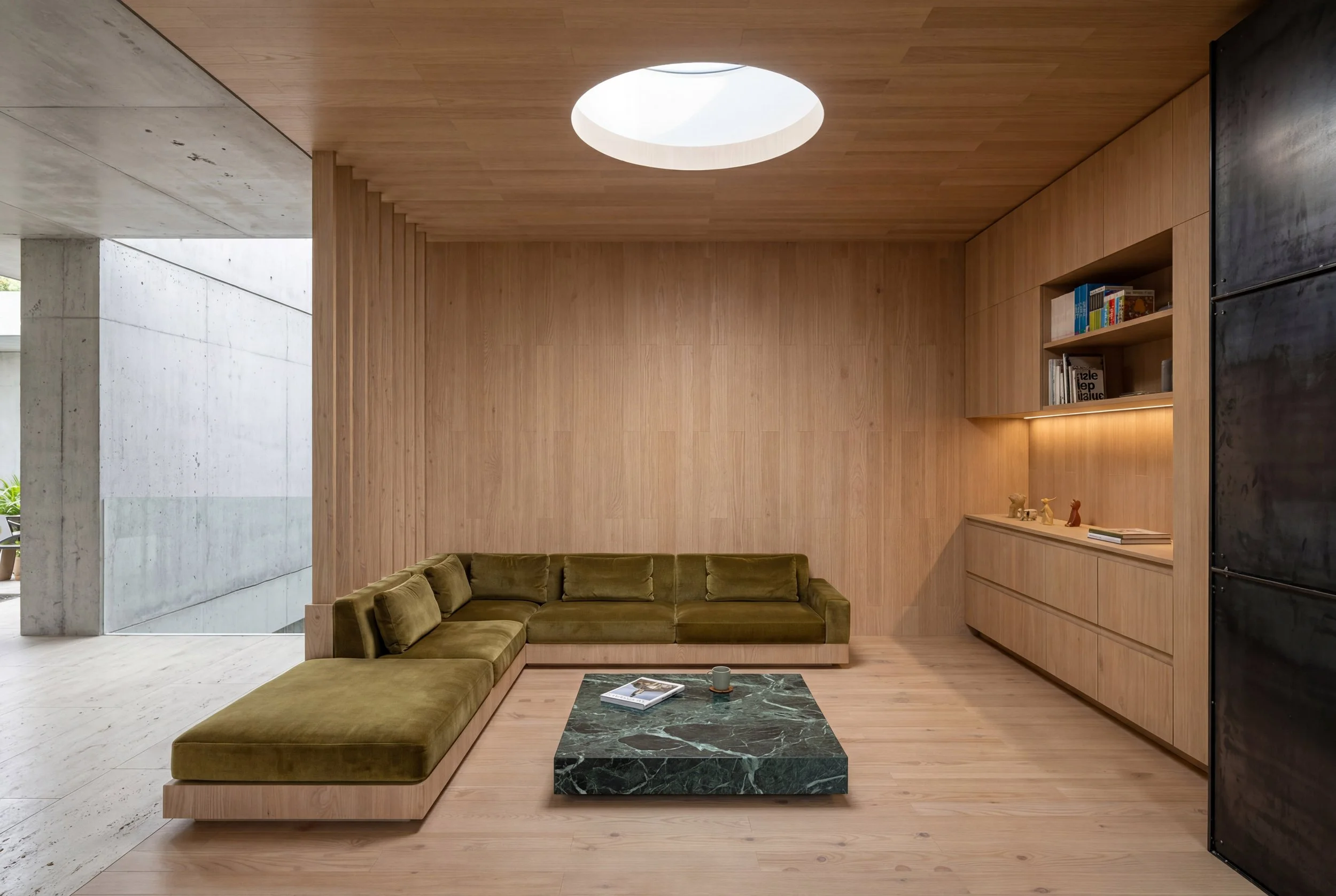
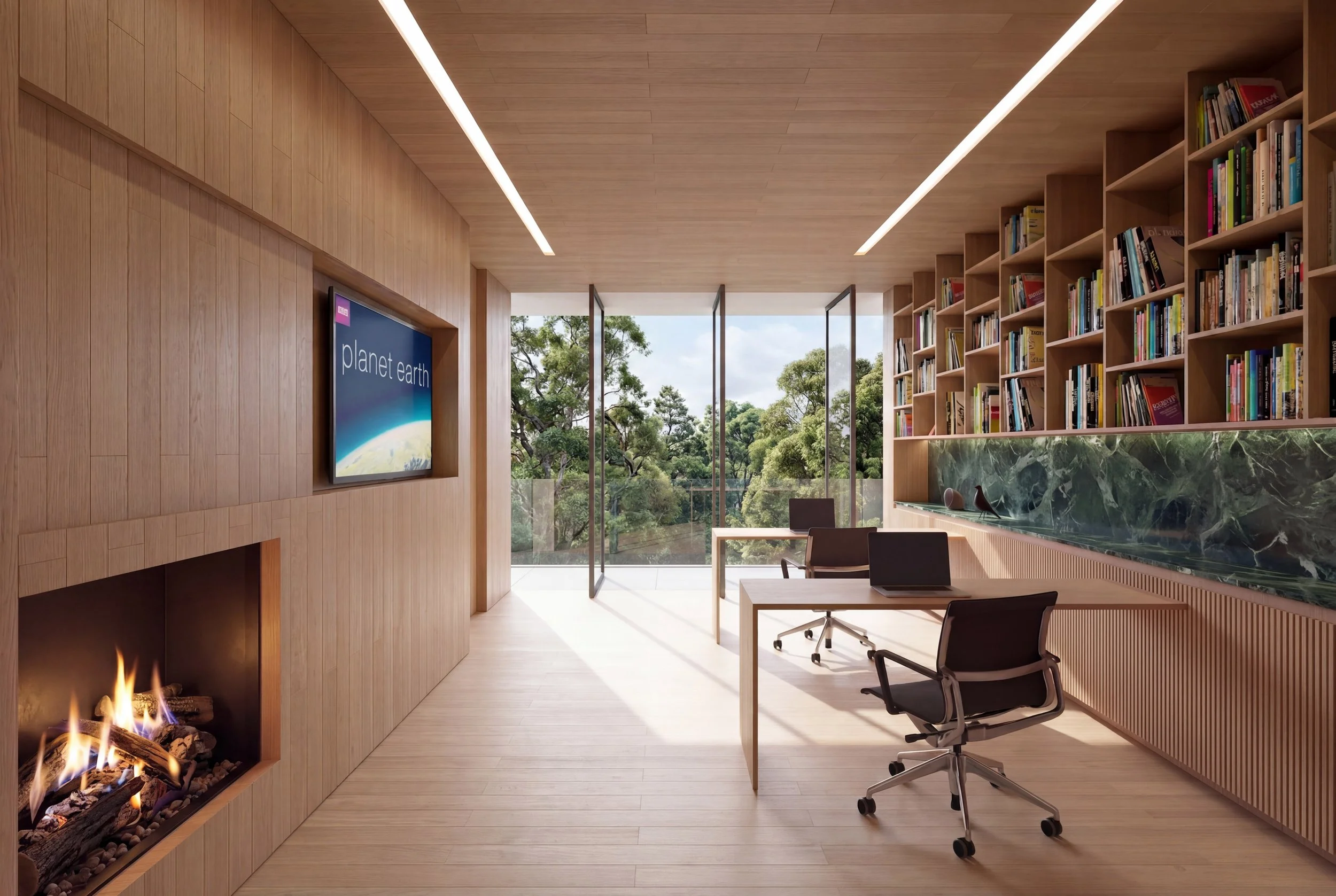
The palette is austere in range and generous in execution. Board-formed concrete defines the structural envelope, its surface texture celebrated rather than concealed. Against this mineral ground, white oak deploys across walls, ceilings, treads, shelving, cabinetry, and floors — not as matching finishes but as a single material considered in every dimension. Blackened steel at the stair spine and door surrounds introduces graphic intensity, keeping the warmth of the oak from becoming sweet. Three materials. One coherent world.
Toward an Architecture of Permanence
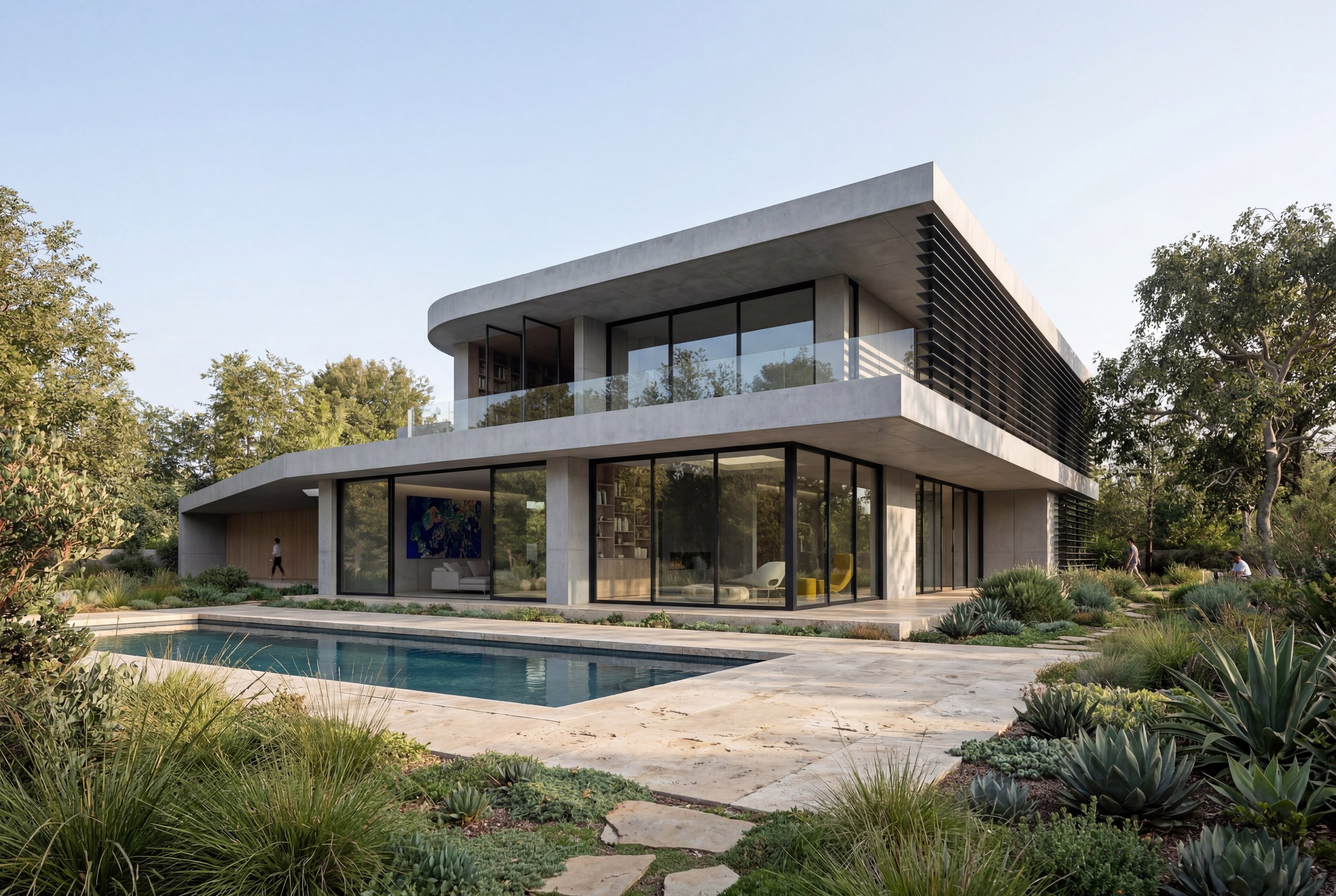
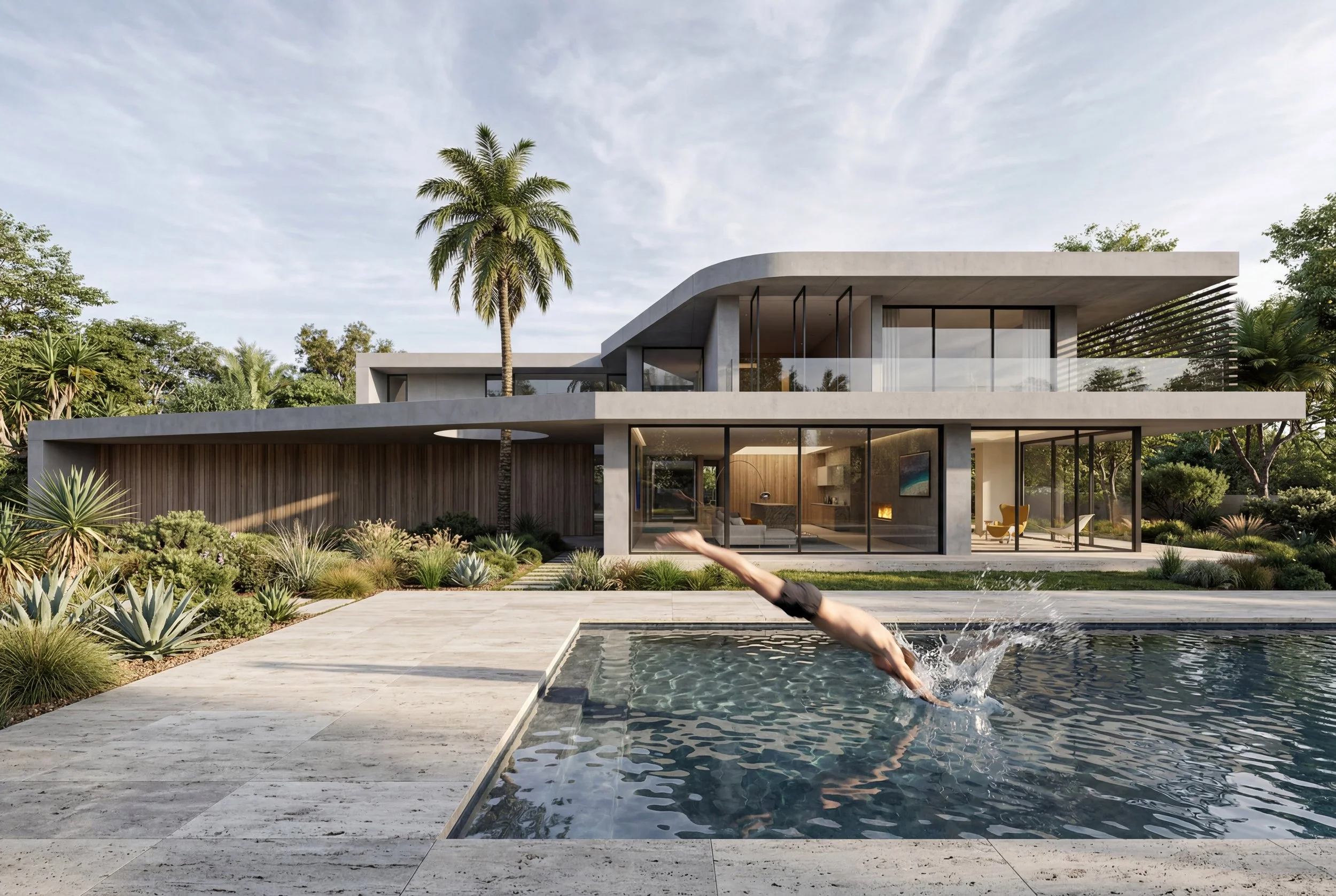
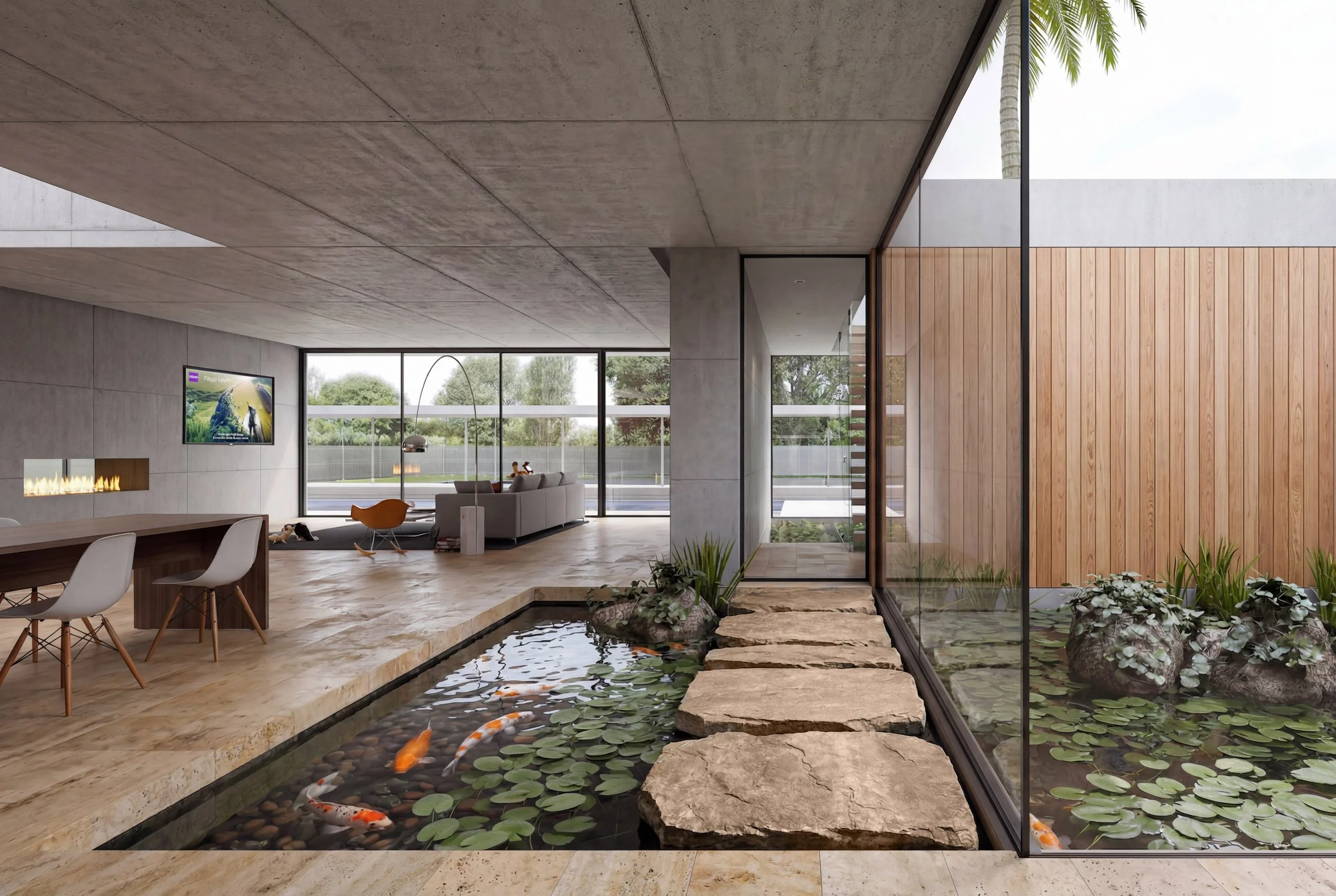
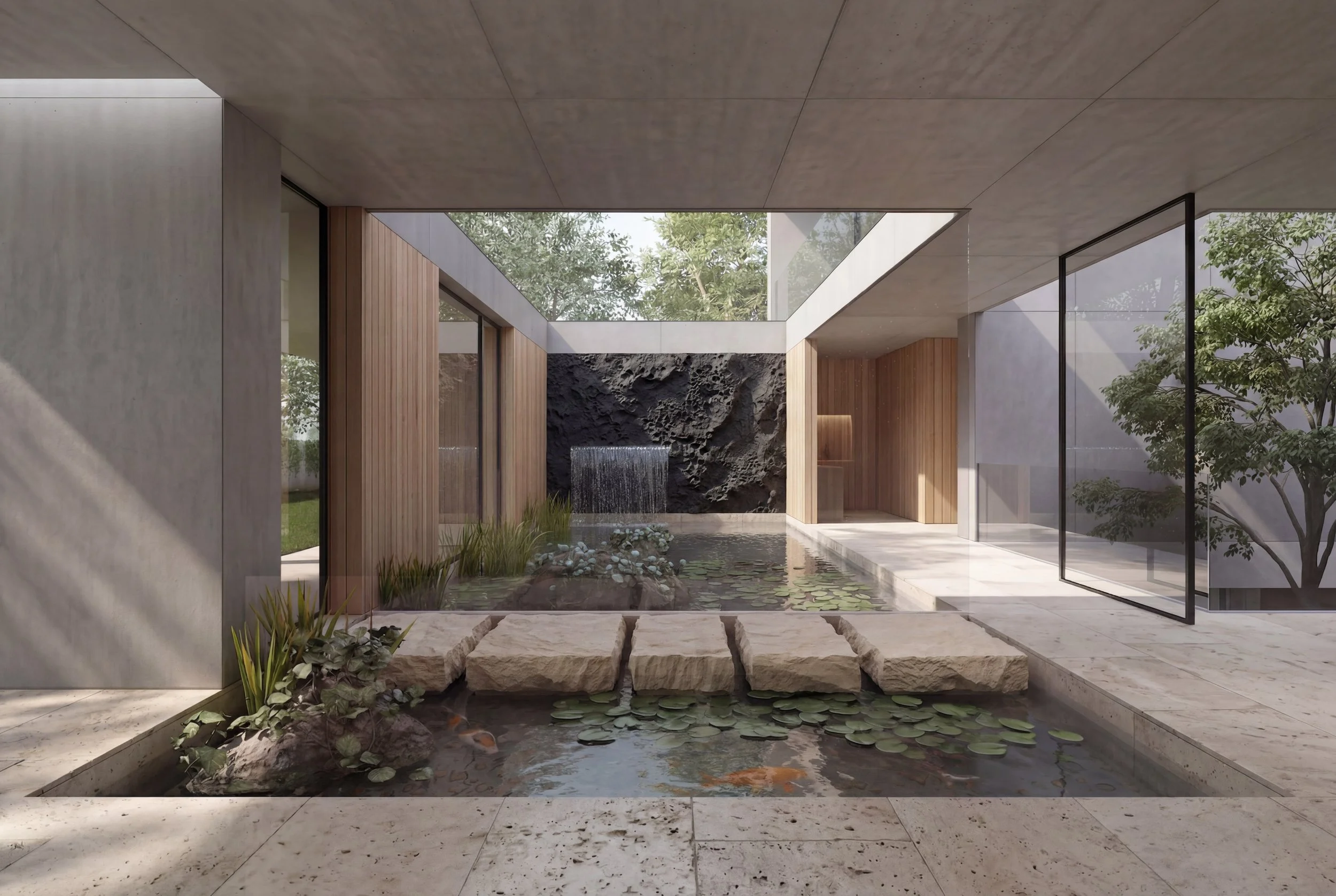
The renderings that preceded construction and the photographs that document the completed work tell an unusual story of fidelity. What was imagined was built. This residence does not announce itself or perform novelty for its own sake. It simply exists: resolved, rooted, and suffused with the particular intelligence of an architect who understands that the highest ambition of a house is to become indispensable to the life lived within it.
SIZE
16,000 sf
COMPLETION
Design Development
ROLE
Principal Architect / Interior Design